


case study
50% faster patient check-ins with a modular, FHIR-ready registration platform
Replaced King's College Hospital's legacy EHR registration workflow with a lightweight, modular web platform, improving patient registration, reducing costs, and enabling future-ready compliance.
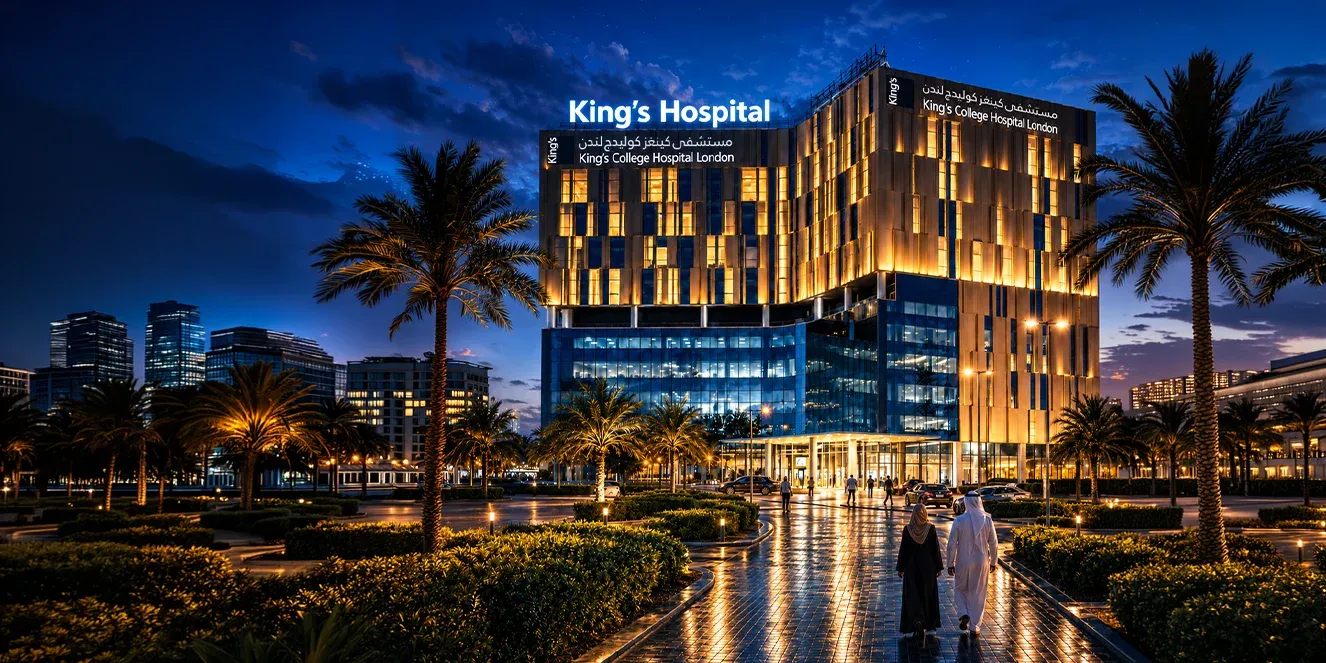

Replaced King's College Hospital's legacy EHR registration workflow with a lightweight, modular web platform, improving patient registration, reducing costs, and enabling future-ready compliance.
About
- Client: King's College Hospital
- Industry: Healthcare
- Location: UAE
Scope of work
- Migration of patient registration and booking from HL7 to FHIR R4
- React-based registration interface with real-time validation
- SMART on FHIR authentication with existing hospital credentials
- Offline-first web architecture for an air-gapped network
- Zebra label printer and Emirates ID card reader integration
- Configuration-driven forms, codesets, and visual scheduling
Tech stack
- React
- Oracle Millennium
- FHIR R4
- SMART on FHIR
Modernizing Registration: A Critical First Touchpoint Held Back by Legacy Tech
King's College Hospital relied on a legacy Oracle Millennium EHR built on outdated HL7 standards. With over 15 million patient interactions requiring registration every year, the hospital needed a faster, more accessible, and interoperable system without disrupting live operations.
- Heavy reliance on Oracle for licensing and specialized manpower drove up operational costs and limited autonomy.
- The registration app only ran on Windows machines, ruling out tablets, kiosks, and mobile devices.
- Legacy HL7 protocols could not support modern JSON-based healthcare APIs or cloud-native patterns.
- A monolithic architecture made debugging, testing, and deploying changes slow and risky.
- All systems ran on a private, air-gapped network, requiring a fully self-contained application.
A Lightweight, Modular Platform for Modern Patient Registration
Sedin rebuilt King's College Hospital's patient registration and booking workflow on modern web technologies and FHIR R4 standards, de-risking the transition and future-proofing the system without disrupting hospital operations.
Sedin replaced brittle HL7 integrations with Oracle Millennium's FHIR R4 APIs, adding an adapter layer that turned complex healthcare data into developer-friendly objects for faster delivery.
SMART on FHIR authentication plugged the new web app into the existing login system, so clerks kept their familiar credentials with no new logins and no training overhead.
A React interface with real-time validation, offline-first caching, and single-scan Emirates ID autofill made check-ins faster across desktops, tablets, and phones.
STEP
01
Audited the legacy EHR
Assessed the existing Oracle Millennium system to identify stable APIs and data contracts that could be safely leveraged.
02
Adopted FHIR R4 as the data backbone
Validated Oracle's FHIR API capabilities and replaced legacy HL7 integrations with modern, JSON-based interoperability.
03
Built an offline-first web architecture
Used service workers, local caching, and client-side state resilience to deliver a responsive UI on the hospital's air-gapped network.
04
Rebuilt the registration interface
Developed a React frontend with real-time validations that catch errors instantly instead of after submission.
05
Integrated hospital hardware
Connected Zebra label printers for instant barcode printing and built a Windows service to read Emirates ID cards for one-scan patient autofill.
06
Redesigned clerk workflows
Introduced focused appointment lists, tabbed check-in forms, two-click visual scheduling, and real-time duplicate checks for patient records.
50%
Faster Check-ins
Cut patient check-in time with real-time validation that guides clerks through complex forms and catches errors instantly.
100%
Device Flexibility
Enabled the registration platform to run across desktop, mobile, tablet, and browser, moving beyond Windows-only access.
30%
Lower Operational Costs
Reduced reliance on Oracle licensing and specialized staff, lowering the cost of running patient registration.
+
Future-Ready Compliance
Built on FHIR R4 with modular workflows so the system can evolve with new healthcare standards.
+
Configuration-Driven Control
Made adding new form options or codesets a matter of minutes instead of days.
+
Single-Scan Patient Autofill
Integrated Emirates ID card readers so clerks can auto-fill patient details with one scan.
Bottom Line
Sedin helped King's College Hospital move beyond the limits of its legacy EHR with a lightweight, modular registration platform built on FHIR. The transformation delivered faster check-ins, lower costs, and full device flexibility, giving the hospital a future-ready foundation for interoperable patient care.
Featured projects
View all

CPG
A mobile-first rebuild with real-time pricing, multi-state compliance, and automation-ready foundations.
Energy10 days mobile MVP shipped
40% mobile traffic served
0 manual pricing uploads


Clinical Minds
A scalable Selenium + Cucumber framework, integrated into CI/CD.
Healthcare1,000+ test cases created
80% E2E UI automation
75% test cases automated


Yamaha Creator Pass
A headless subscription platform that gives creators one login and one bill across 20+ partner tools, launched on schedule at SXSW.
MusicSXSW launched on schedule, March 2026
3 stage-based passes from $14.99 per month
Day 1 MRR, ARR + churn tracked in admin